What are Hair Vitamins for Hair Loss and Do They Work?
Hair loss affects many people. It can impact self-esteem and overall confidence. In recent years, there has been a surge in interest regarding Hair Vitamins for Hair Loss. These vitamins promise to nourish hair follicles and promote growth.
Many products advertise their benefits, yet results can vary. Some users report significant improvements, while others see minimal changes. This inconsistency raises questions about their effectiveness. Are Hair Vitamins the miracle solution they claim to be?
Understanding the science behind these supplements is essential. Ingredients like biotin, vitamins A and D, and folic acid often appear in these vitamins. However, some users might experience side effects. It’s crucial to assess the benefits against potential downsides when considering Hair Vitamins for Hair Loss.
Understanding Hair Vitamins and Their Role in Hair Loss Solutions
Hair vitamins have gained popularity as a potential solution for hair loss. These vitamins often contain essential nutrients that support hair health. Common ingredients include biotin, vitamin D, and zinc. Many people turn to these supplements hoping for fuller, thicker hair. However, the effectiveness of hair vitamins remains a topic of debate.
Understanding how hair vitamins work is crucial. They aim to nourish hair follicles and improve growth. Biotin, for instance, is frequently touted for its role in promoting keratin production. This is vital for hair structure. Yet, scientific evidence on their effectiveness can be inconsistent. Individual experiences vary widely; some report improvements, while others see little change.
It's also important to consider lifestyle factors. Diet, stress, and hair care routines all influence hair health. Relying solely on vitamins might not be sufficient. A balanced approach may yield better results. Incorporating a variety of nutrients from whole foods could be more beneficial than supplementation alone. The pursuit of healthy hair often requires reflection and adjustment of habits.
What are Hair Vitamins for Hair Loss and Do They Work?
| Vitamin |
Function |
Benefits for Hair |
Sources |
Effectiveness |
| Biotin |
Supports keratin production |
Promotes hair growth, strengthens hair |
Eggs, nuts, seeds, sweet potatoes |
Widely regarded as effective |
| Vitamin D |
Regulates hair follicle cycle |
May help with hair follicle regeneration |
Sunlight, fatty fish, fortified foods |
Promising, but more research needed |
| Vitamin E |
Antioxidant, protects cells |
Increases blood circulation to the scalp |
Nuts, spinach, avocados |
May improve overall hair health |
| Vitamin A |
Promotes sebum production |
Keeps scalp healthy and moisturized |
Carrots, sweet potatoes, kale |
Essential, but balance is key |
| Folic Acid |
Important for cell growth |
Encourages new hair growth |
Leafy greens, beans, fortified cereals |
Effective in promoting hair thickness |
Common Ingredients Found in Hair Vitamins for Thinning Hair
Hair vitamins have become popular for those experiencing hair loss. Many seek solutions that address thinning hair. But what’s in these vitamins? The ingredients can vary widely.
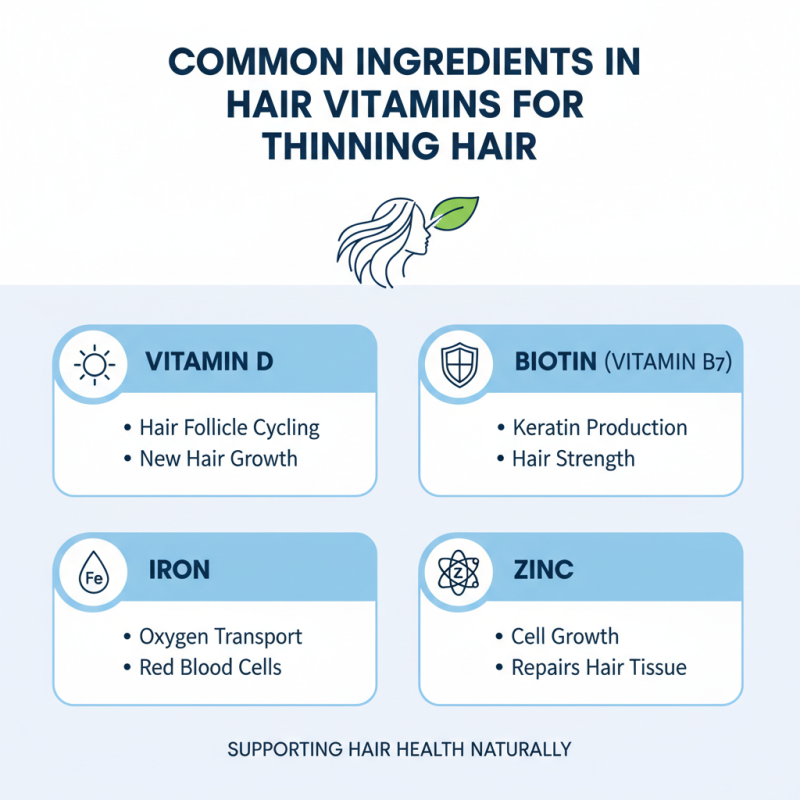
Biotin is a common ingredient. It’s known to strengthen hair and promote growth. Another popular component is folic acid. It helps with cell division and may support healthy hair follicles. Additionally, Vitamin E is often included. This vitamin can improve scalp circulation. A healthy scalp contributes to better hair health. Minerals like zinc and iron are also prevalent. They play a crucial role in hair nourishment and can prevent hair shedding.
However, the effectiveness of these vitamins is often debated. Not everyone sees results, and some may experience side effects. It’s also important to note that hair loss can stem from various factors. Stress, genetics, and diet all play a role. Many people find themselves frustrated with the slow progress. A multifaceted approach may be necessary. Balancing vitamins with a healthy lifestyle is key.
How Hair Vitamins Claim to Enhance Hair Growth and Health
Hair vitamins have gained popularity in recent years. They promise to enhance hair growth and overall health. Many people seek solutions for hair loss, and vitamins seem like a simple answer. Research suggests that certain nutrients play a crucial role in hair health. For instance, biotin, a B vitamin, is often highlighted. Studies indicate that biotin deficiency can lead to hair loss. In a survey, about 38% of women reported changes in hair texture and volume after using such supplements.
However, the effectiveness of hair vitamins can vary. Not everyone experiences noticeable results. A significant factor is individual health. Nutrient absorption rates differ among people. Genetics and hormonal balance also influence hair growth. Moreover, over-reliance on supplements may lead to neglecting a balanced diet. A report from the American Academy of Dermatology emphasizes whole foods. Nutrient-dense foods, rather than pills, should form the primary source of vitamins and minerals.
In essence, while hair vitamins might offer benefits, they are not magic solutions. They can be a part of a broader strategy for better hair health. Understanding one’s unique needs is vital. Achieving healthy hair often requires a comprehensive approach that includes dietary choices, lifestyle changes, and, when necessary, professional advice.
Hair Vitamins and Their Impact on Hair Growth
This chart illustrates the percentages of users who reported improvement in hair growth and health after using hair vitamins over a 6-month period. The data reflects the experiences of individuals taking different types of hair vitamins, showcasing their effectiveness in enhancing hair thickness, reducing hair loss, and improving overall hair health.
Scientific Evidence Supporting the Efficacy of Hair Vitamins
Hair vitamins are often marketed as a solution to hair loss. They typically contain a mix of vitamins, minerals, and nutrients. Common ingredients include biotin, vitamin D, and zinc. Some studies suggest that these nutrients play a role in promoting hair health. For instance, biotin may help improve keratin infrastructure, crucial for hair strength. However, results can vary widely. Not everyone sees significant improvement.
The scientific community provides mixed evidence. Some research supports the idea that deficiencies in specific nutrients can lead to hair loss. For example, a lack of iron and vitamin D may contribute to thinning hair. Yet, there is insufficient evidence that merely taking vitamins can reverse hair loss. A well-balanced diet remains vital. It’s essential to evaluate your nutritional intake before opting for supplements.
Many people report changes after using hair vitamins. However, these changes could stem from other lifestyle factors. Stress levels, sleep quality, and overall diet greatly impact hair health too. Reflecting on these aspects is crucial, as reliance on vitamins alone may overlook underlying issues causing hair loss. Personal experience often suggests that a holistic approach could be more beneficial for long-term results.
Potential Side Effects and Considerations When Using Hair Vitamins
Hair vitamins are often marketed as solutions for hair loss. However, potential side effects and considerations are crucial to understand. Some vitamins can interact with medications. They may cause unwanted reactions in some individuals, such as allergies, stomach discomfort, and nausea. It's essential to consult a healthcare professional before starting any supplement regimen.
When considering hair vitamins, start with a small dosage. Monitor your body's response closely. Not everyone experiences positive results. Daily routines should include a balanced diet rich in nutrients. This can sometimes be more effective than pills.
Here are some tips to improve hair health naturally: Consider incorporating foods with omega-3 fatty acids. They promote scalp health. Staying hydrated is key too. Drink plenty of water throughout the day. Remember, patience is important. Hair growth takes time, and results from vitamins may vary for each person.
 +852 54195003